A tile leveling system is a tool used during ceramic or porcelain tile installation to ensure a perfectly level and even surface. It helps to prevent unevenness, lippage (edges of tiles being at different heights), and other imperfections that can detract from the overall look and functionality of your tiled area.
Components: The system typically consists of three main components:
Tile Clips: These small, plastic clips are placed under the edges of adjacent tiles.
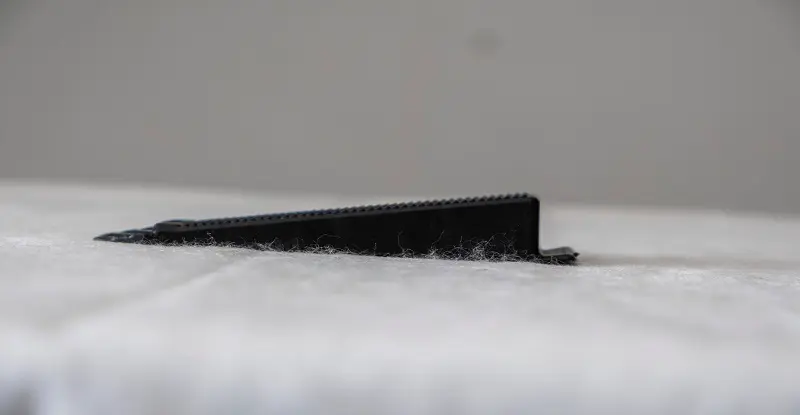
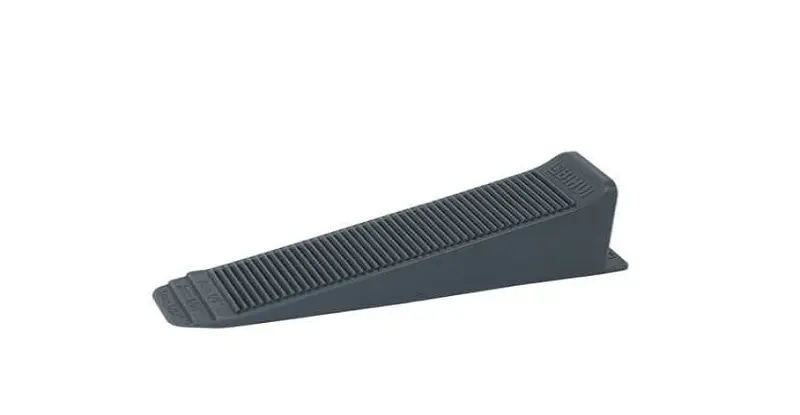
Tile Wedges: These wedge-shaped tools are inserted into the clips to create tension and push the tiles to the same level.
Tile Leveling Pliers (optional): These pliers apply additional pressure on the wedges for more precise leveling, especially in larger tile installations.
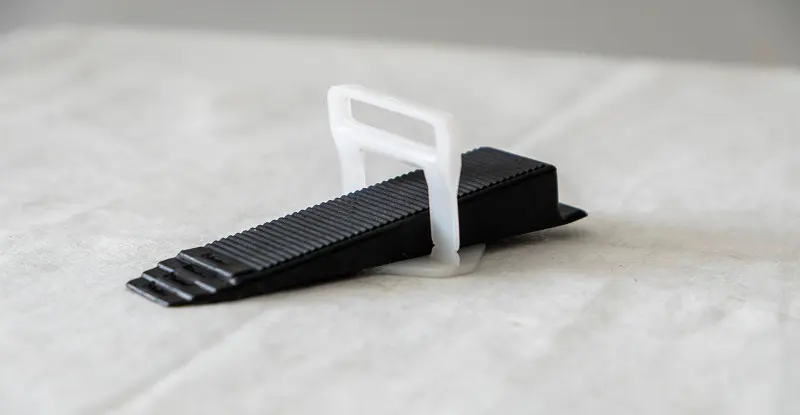
Place Clips: Clips are positioned strategically under the edges of adjoining tiles before placing the next tile.
Insert Wedges: Wedges are tapped into the clips using a mallet or your hand.
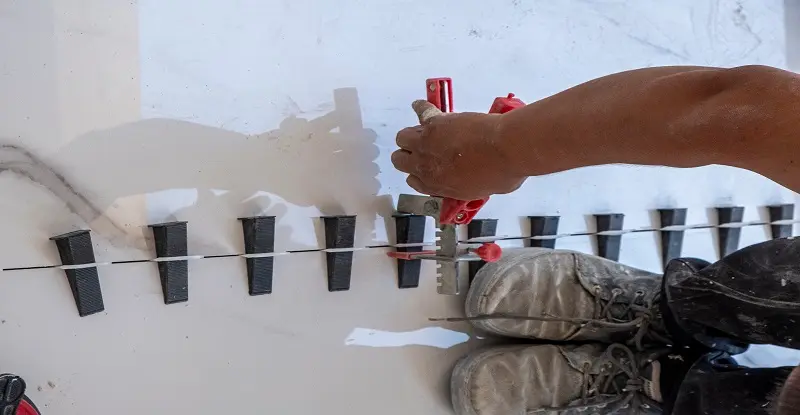
Leveling with Pliers (optional): For more precise control, tile leveling pliers are used to squeeze the wedges further, ensuring the tiles are perfectly level.
Tile Adheres: As the tile adhesive cures, the clips and wedges hold the tiles in place, preventing them from moving or settling at different heights.
Removal: Once the adhesive has cured completely, the clips can be snapped or kicked off at the designated breaking point. The wedges can then be reused for subsequent tiles.
Achieves Flat, Even Surface: The primary benefit is ensuring a perfectly level and uniform tile surface, free from lippage and unevenness.
Improves Installation Efficiency: Tile leveling systems can make the installation process faster and easier, especially for DIY enthusiasts.
Reduces Lippage: By keeping tiles level, the system minimizes unsightly lippage, enhancing the overall aesthetics of the tiled area.
Minimizes Grout Variations: A level surface allows for more consistent grout lines, contributing to a professional-looking finish.
Prevents Tile Movement: The system holds tiles in place while the adhesive cures, preventing them from shifting or becoming uneven.
Study proposal : click here for more information about Tile adhesive and stone and ceramic scoop .
DIY Installers: Even for those new to tile installation, a leveling system can simplify the process and achieve professional-looking results.
Professional Tile Setters: Professionals can benefit from increased efficiency and reduced risk of uneven tiles, saving time and ensuring customer satisfaction.
Large Tile Installations: For larger floor or wall tiles, a leveling system becomes even more crucial to maintain a flat surface and prevent lippage.
Overall, a tile leveling system is a valuable tool for both professional tile setters and DIY enthusiasts. It helps to achieve a flawless, level tile installation, enhancing the aesthetics and functionality of your tiled space.
Increased cost: Tile leveling systems add additional cost to your project. You need to factor in the cost of clamps, wedges, and optionally, leveling pliers.
Additional installation time: While they can improve efficiency in some ways, using a leveling system adds an extra step to the tile installation process. It takes some time to place the clips and wedges for each tile.
More cleanup: The presence of clamps and wedges during installation can make cleaning up excess grout during the grouting process a bit more difficult.
Potential for uneven grout lines: If the clamps are not positioned precisely, or the wedges are not tightened evenly, there is a chance that the grout lines between the tiles will become uneven.
Problem for uneven subfloors: Tile leveling systems are more effective on even subfloors. If your subfloor has dips or bumps, the system may not be able to fully compensate for those irregularities.
Improper use can damage tiles: Applying too much pressure with wedges or using the system on the wrong tiles can lead to cracks or cuts in the tile surface.
Tile leveling systems are primarily used during the installation of ceramic or porcelain tiles for walls and floors. Their main purpose is to ensure a perfectly level and even surface, free from lippage (uneven tile edges) and other imperfections. Here’s a breakdown of their applications across different scenarios:
Ideal Applications:
DIY Tile Installers: For those new to tile installation, a leveling system can significantly simplify the process and achieve professional-looking results. The visual cues and physical assistance in maintaining level tiles make it easier for beginners.
Large Tile Installations: For larger floor or wall tiles, maintaining a flat surface and preventing lippage becomes even more critical. Tile leveling systems become instrumental in such scenarios to ensure a seamless and aesthetically pleasing tile layout.
Uneven Substrates (to a limited extent): While not a magic solution, tile leveling systems can help compensate for minor imperfections on the subfloor. They can bridge small dips or bumps, but for major subfloor issues, proper subfloor preparation is still crucial.
Professional Tile Setters: Even for experienced professionals, leveling systems can offer advantages. They can increase efficiency by minimizing the risk of uneven tiles, saving time and ensuring customer satisfaction.
Other Applications:
Stone Tile Installation: While primarily designed for ceramic and porcelain tiles, some leveling systems can be adapted for use with certain types of stone tiles, like natural stone veneer. However, it’s important to check with the system manufacturer for compatibility.
Mosaic Tile Installations: While less common, some leveling systems can be used with mosaic tiles, particularly larger mosaic sheets. The clip and wedge design might need to be adjusted for smaller mosaic tiles.
Always follow the manufacturer’s instructions for the specific tile leveling system you’re using. Different systems might have slight variations in application.
Practice on scrap tiles before starting on your main project to get comfortable with the system.
Use the appropriate size clips and wedges for the thickness of your tiles.
Ensure your subfloor is properly prepared and level before starting tile installation. Tile leveling systems can’t fix major subfloor issues.
By using a tile leveling system appropriately, you can achieve a flawless, level tile installation that enhances the aesthetics and functionality of your tiled space.
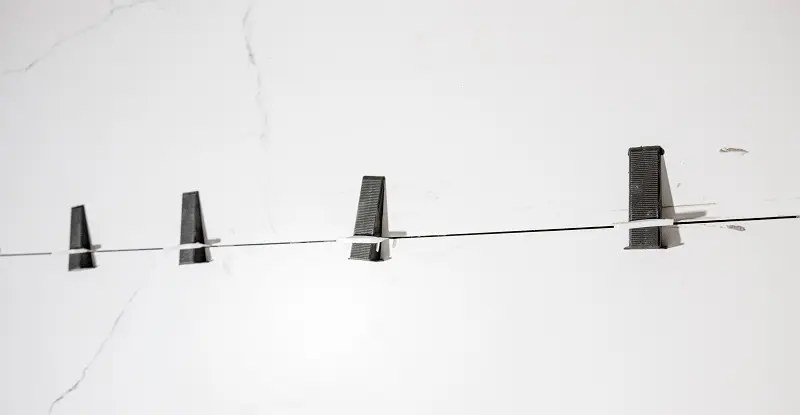
Tile Leveling Systems: An invaluable tool for flawless tile installation
Tile leveling systems have become a popular tool for professional tilers and DIY enthusiasts alike. They provide a simple yet effective way to achieve a completely smooth and even tile surface, free of lip and other imperfections.
