Pool waterproofing is the process of applying a special barrier to the surface of a swimming pool to prevent water from leaking out and to keep groundwater or other external moisture from seeping in. This is crucial for several reasons:
Structural Integrity: Uncontrolled water movement can damage the pool structure by causing cracks, leaks, and even foundation issues. Proper waterproofing protects the pool’s shell and surrounding structures.
Water Conservation: Leaks can waste large amounts of water, which is not only environmentally unfriendly but also increases pool maintenance costs.
Hygiene and Safety: Seepage of groundwater or other external moisture can introduce contaminants into the pool water, compromising hygiene and potentially posing health risks to swimmers.
Aesthetics: Visible leaks or water stains can detract from the visual appeal of your pool.

There are various materials used for pool waterproofing, each with its own advantages and considerations:
Crystalline waterproofing: This involves applying a special coating that allows water vapor to pass through but not liquid water. It becomes a permanent part of the concrete structure.
Liquid-applied membranes: These are elastomeric or acrylic-based coatings that form a flexible, seamless barrier on the pool surface.
Sheet membranes: These are prefabricated sheets made of materials like PVC or TPO that are adhered to the pool surface. They require careful installation for a watertight seal.
Factors to Consider When Choosing Pool Waterproofing:
Type of pool: Concrete, fiberglass, or vinyl liner pools may have different waterproofing requirements.
Budget: Costs can vary depending on the chosen material and the complexity of the pool’s design.
Climate: Factors like temperature extremes and freeze-thaw cycles can influence the choice of waterproofing material.
Desired lifespan: Different materials offer varying degrees of durability and longevity.

Pool waterproofing is a critical step in pool construction. Improper installation can lead to leaks and other problems down the line. It’s highly recommended to consult with experienced professionals who can assess your specific pool and recommend the most suitable waterproofing solution. They will also ensure proper installation techniques are followed for a long-lasting and effective waterproof barrier.
By implementing proper pool waterproofing, you can ensure your swimming pool remains structurally sound, watertight, hygienic, and aesthetically pleasing for years to come

1.Physical state: three components
2. Color: gray
3. Packaging: 25 kg bags and one liter gallon
4. Product type: polymer cement base
5. Ability to mix: Yes
6. Chlorine ion: none
7. Expiry date: one year after production
8. Storage conditions: Keep away from cold and heat in a closed bucket
Protects the Pool Structure: Proper waterproofing acts as a barrier, preventing water from leaking out of the pool and keeping external moisture from seeping in. This safeguards the pool shell and surrounding structures from damage caused by uncontrolled water movement. Cracks, leaks, and even foundation issues can be prevented with effective waterproofing.
Water Conservation: Leaks can be a significant source of water waste. Pool waterproofing helps conserve water, which benefits the environment and reduces pool maintenance costs associated with refilling a leaky pool.
Improved Hygiene and Safety: Seepage of groundwater or other external liquids can introduce contaminants into the pool water. Proper waterproofing helps maintain clean and hygienic pool water, minimizing the risk of health problems for swimmers.
Enhanced Aesthetics: Leaks and water stains can be unsightly and detract from the visual appeal of your pool. Effective waterproofing keeps your pool looking beautiful and inviting.
Increased Pool Lifespan: By protecting the structure from water damage, pool waterproofing contributes to a longer lifespan for your pool, saving you money on repairs and replacements in the long run.
Study proposal : click here for more information about Dubai infinity pool and What is a pool epoxy resin?
Initial Cost: Installing pool waterproofing adds to the upfront cost of pool construction. The cost can vary depending on the chosen material, pool size, and complexity of the design.
Maintenance Requirements: While generally low-maintenance, some waterproofing materials may require periodic inspection and potential reapplication over time. Consult with a professional about the specific maintenance needs of your chosen waterproofing system.
Potential for Installation Errors: Improper installation of the waterproofing system can lead to leaks and other problems. That’s why it’s crucial to hire experienced and qualified professionals who can ensure a watertight seal using the appropriate techniques for your pool type.
Limited Applicability for Existing Pools: Adding waterproofing to an existing pool can be more challenging and potentially more expensive compared to incorporating it during initial construction. However, in some cases, it might still be a viable option, so consulting with a pool professional is recommended.
Overall:
While there is an initial cost associated with pool waterproofing, the advantages it offers in terms of structural protection, water conservation, hygiene, aesthetics, and extended pool lifespan outweigh the disadvantages. For new pool construction, waterproofing is considered an essential step. For existing pools, a cost-benefit analysis along with professional consultation can help determine if waterproofing is the right solution for your situation.
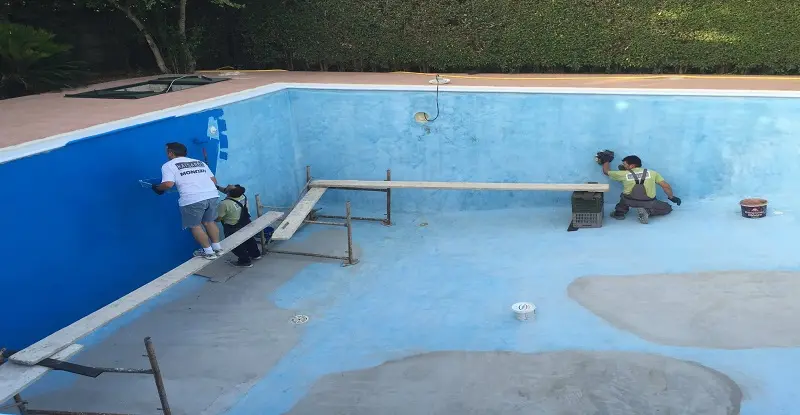
Waterproof ability:
Impermeable: The main function of pool waterproofing is to be completely impervious to water, preventing leakage from the pool and preventing external moisture from entering. This ensures that the pool retains water and maintains a constant water level.
Bridging Cracks: Effective waterproofing materials must be flexible enough to fill small cracks or crevices in the pool structure and prevent them from becoming leak points.
Chemical resistance: Pool water contains various chemicals such as chlorine and disinfectants. Waterproofing materials must be resistant to these chemicals to maintain their integrity and effectiveness over time.
UV resistance: Especially for outdoor pools, waterproofing materials must be resistant to ultraviolet (UV) radiation from sunlight to prevent degradation and ensure long-term performance.
Functional features and installation:
Ease of application: Some waterproofing materials are easier to apply than others. Factors such as spray applications versus troweled membranes can affect the speed and complexity of installation.
Compatibility: The selected waterproofing material must be compatible with the existing structure of the pool and other materials used in the pool system, such as adhesives or sealants.
Bond strength: A strong bond between the waterproofing material and the pool structure is critical for waterproof sealing. This material must adhere well to the selected substrate for optimal performance.
Seamless finish: Ideally, the waterproofing material should form a seamless, continuous barrier across the entire surface of the pool, minimizing the risk of leaks at connection points.
They are recycled or have less harm to the environment during production and disposal.

Pool waterproofing is an essential element for both new pool construction and existing pool renovations. It serves as a critical barrier that offers several benefits:
Leak Prevention: Waterproofing stops water from escaping the pool and keeps external moisture from entering. This ensures efficient water management and prevents leaks that can waste water and lead to structural problems.
Structural Protection: By preventing water from infiltrating the pool structure, waterproofing safeguards the shell and surrounding elements from damage caused by water movement and freeze-thaw cycles (depending on climate).
Improved Hygiene: A watertight barrier helps maintain clean and healthy pool water by preventing contamination from external sources like groundwater or soil.
Reduced Maintenance Costs: Leaks and water damage can be expensive to repair. Effective waterproofing minimizes these issues and contributes to lower maintenance costs in the long run.
Extended Pool Lifespan: By protecting the structure and preventing leaks, waterproofing helps your pool last longer, saving you money on replacements and repairs.
In conclusion, pool waterproofing is a worthwhile investment that safeguards your pool, promotes hygiene, and extends its lifespan. Consulting with a pool professional can help you determine the most suitable waterproofing solution for your specific needs and ensure a watertight and long-lasting swimming pool.
